What is Reverse Osmosis?
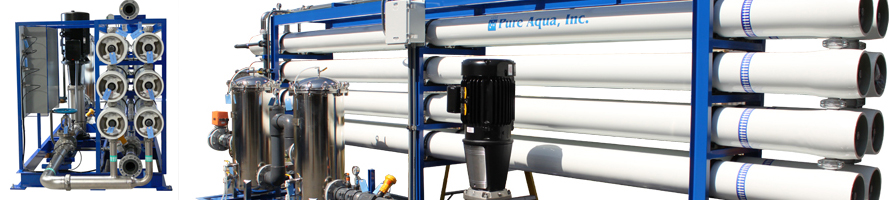
Reverse Osmosis:
Reverse Osmosis, or hyper filtration, is the best method for purification available today. It is the standard remedying machinery utilized by premium packaged water associations. It is adequate in dispensing with or generously decreasing an extremely wide exhibit of contaminants. Of all the advances used to treat drinking water in residential applications, it has the most reach of contaminant evacuation. Particles or debasements could be removed as a result of reverse osmosis. The result is passed by way of a semi-porous membrane. The semi-porous membrane permits the entry of water yet rejects particles such as sodium and calcium or contaminants such as microscopic organisms or urea.
Reverse Osmosis Membranes:
The imperative part of the Reverse Osmosis water purification system is the membranes. Reverse Osmosis membranes empower the filtration system to handle water saltiness. Notwithstanding this, inorganic or natural combines that may be potentially hurtful contaminants can additionally be removed by the membrane. Reverse osmosis is especially suitable in regulating the growth of multivalent cations of Calcium and Magnesium that create water hardness. Reverse Osmosis innovation additionally handles considerable metals, industrial chemicals, agro-chemicals, protozoan microorganisms, parasites, and waste from natural materials correspondingly well. The adequacy of this engineering has made it the most popular method in water filtration for both residential and industrial applications.
How Reverse Osmosis Membranes Works?
A Reverse Osmosis membrane is semi-penetrable or specifically-porous, permitting certain particles to pass through, while alternates are separated out.
A Reverse Osmosis system is made up of a thin and delicate, semi-porous, permeable membrane. The membrane has ultra-fine pores on its surface, which will not allow larger molecules to pass through. Any time water is compelled to pass through the membrane, the larger molecules will not pass through, subsequently being divided from the water.
This essentially makes the membrane the most essential part of a Reverse Osmosis based unit. Extensively vocalizing, the Reverse Osmosis membrane is accessible in two characters.
Cellulose Triacetate Membrane (CTA)
These membranes are amazingly hydrophilic and are perfect for uprooting antibodies from the water. The issue with the CTA membranes is that they are completely non-protein tying, which means that they also uproot proteins from the water. In addition, this membrane must be sterilized consistently in order to keep bacterial development in control.
TFC Membranes
TFC membranes are inanimate in nature and do not have bacterial development, which does not require sterilization. TFC membranes are more costly than the CTA membranes. The issue with TFC membranes is that they are harmed by chlorine – a normal contaminant in water.
Commercial & Industrial Reverse Osmosis System
Commercial Reverse Osmosis Systems and Industrial Reverse Osmosis systems are utilized as part of a nourishment creation. For nourishment associations that process nourishment, particularly for refreshment associations, reverse osmosis is a preferable alternative for water purging. The reason being is that it is much more effective than water warming, and it won't harm the proteins or the catalysts held inside nourishment items. This is particularly works for dairy products, which hold numerous diverse proteins and compounds.
Control plants utilize osmosis to dispose of minerals in their heater water
Car wash stations and car dealers will frequently utilize osmosis to dispense the contaminants and hard particles in their water to avoid harming the client’s cars. On account of car washes, water that has been treated by reverse osmosis is utilized usually throughout the last flush, which makes the cars easier and faster to dry, therefore saving the car wash money.
Residential Reverse Osmosis System:
Residential Reverse Osmosis Systems will evacuate an exceptional sum of hurtful contaminants that are in your drinking water. The systems strip the water of hurtful chemicals, and some systems strip the minerals that are necessary for our bodies. As a result, we need to find a source for these minerals, which may not be as healthy as minerals found in water. For this reason, it is vital to pick the best water filtration system for your home that will not remove the minerals found in the water.
Reverse Osmosis Advantages
Reverse Osmosis is a system for filtration that includes the use of a semi-penetrable membrane. Any time water is sent through this membrane, the contaminants will not be in the final product. These membranes are equipped for separating not just an extensive variety of particles but also microbes and other ailment-bringing about pathogens. Reverse Osmosis systems are ordinarily fitted for separating over 90 percent of water contaminants.
Reverse Osmosis systems are ideally used for water filtration in places that do not have access to water treated by the city system. For many, Reverse Osmosis is the method that will guarantee that least amount of contaminants in the water.